
AAC 2026: Occupational therapy can help manage FA challenges
A therapist discusses ways OT can benefit patients
Written by |





Living with Friedreich’s ataxia (FA) can make managing daily activities and maintaining independence more difficult, especially as the disease progresses over time. For example, tremors or other FA symptoms can interfere with getting dressed, cooking, or brushing teeth.
Elizabeth Foss, an occupational therapist and one of the speakers at the 2026 Annual Ataxia Conference in Orlando, Florida, sat down with Friedreich’s Ataxia News to discuss how occupational therapy (OT) can help with navigating these challenges.
What occupational therapists do
An occupational therapist can help you find new ways to take care of daily tasks and manage FA symptoms, such as fatigue or fine motor difficulties, as well as lessen their impact on your independence.
“Our bread and butter … is really focusing on function in life and day-to-day tasks,” said Foss, who is based in the Chicago area.
Occupational therapists may be able to:
- recommend adaptive tools, devices, and home modifications, such as an electric toothbrush if symptoms make brushing difficult
- work with other members of your care team, such as speech and physical therapists, to address your needs as fully as possible
- train caregivers, for example, by teaching safe transfer techniques
- support those living with FA in maintaining function and independence as their disease progresses
What matters in occupational therapy for FA
For people with FA and other types of ataxia, Foss strongly recommends finding an OT who specializes in neurological conditions. Being knowledgeable about the brain and ataxia conditions is essential to understanding how symptoms can affect everyday life and how to best support independence.
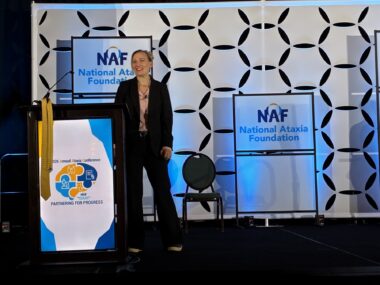
Elizabeth Foss gives a talk at the 2026 Annual Ataxia Conference. (Photo by Agata Boxe)
A personalized approach to occupational therapy is also key to addressing your specific FA needs. People living with the same condition often require different strategies and approaches, according to Foss.
“So, what works for tremors for one individual might not work for another,” she said.
Your occupational therapist should communicate and coordinate with other members of your care team, Foss said.
For instance, if you are being treated by a speech therapist for swallowing issues, your occupational therapist should avoid suggesting swallowing strategies that might conflict with the recommendations made by the speech expert.
“If we’re all on the same page, it can be much more efficient for that patient to progress in their rehabilitation goals,” Foss said.
Preparing for an occupational therapy visit
Planning for your visit with an occupational therapist can help you make the most of it.
First, think about which everyday activities have become challenging because of FA. These could be tasks like:
- cutting your food
- getting in and out of the car
- putting your earrings on
- doing your makeup
- putting a leash on your dog’s collar if you are a dog owner
Then make sure to clearly share your goals with your occupational therapist during your first visit so you can start working together on what matters to you most.
“That is so helpful if [patients] come with the specific things that are valuable to them,” Foss said.
Foss said it’s also important to understand the difference between OT and physical therapy and how they can help people in different ways. If your main goal is to focus on your walking ability, then consulting a physical therapist is the better choice. Occupational therapists focus more on functional independence — being able to do daily activities on your own.
Planning for the future with FA
Because FA is a progressive disease, you should be thinking ahead about your evolving needs. An occupational therapist can help you prepare for future changes in your abilities.
For instance, someone with FA who is planning a bathroom renovation might currently have a bathtub with a 14-inch threshold and want to switch to a shower with a four-inch threshold. While at the time this may seem like an improvement, Foss suggests thinking further ahead by installing a shower with a collapsible or zero-threshold entry. This can make it easier to access the shower later on, especially if you eventually use a wheeled mobility device.
It’s just one example of how a knowledgeable, empathetic occupational therapist can support you in learning to adapt to changes from FA progression as you navigate daily life.
Note: The Friedreich’s Ataxia News team is providing live coverage of the 2026 Annual Ataxia Conference April 9-11 in Orlando, Florida. Go here to see the latest stories from the conference.




Leave a comment
Fill in the required fields to post. Your email address will not be published.