
Finding meaning in the randomness of having Friedreich’s ataxia
Life with FA may be unpredictable, but I still have purpose
Written by |





A few days ago, I heard a scientist talk about the randomness of being born. For example, what are the chances of your parents — and all of their ancestors — meeting? Then there’s the sperm that wins the race against millions of others to the egg. It all seems pretty random.
By random, I mean that no one intentionally waited for the stars to align to create the one unique me. My parents deliberately got pregnant. However, they didn’t realize I would end up being the child they had.
If being alive feels unlikely, it makes you wonder about the odds of having Friedreich’s ataxia (FA). Curious, I looked into it, and the likelihood of being born with FA is about 1 in 50,000.

Then I recalled high school biology, where we studied dominant and recessive genes using eye color. We learned that if both parents have brown eyes but carry the blue-eyed gene, there is a 1 in 4 chance their baby will have blue eyes.
It is the same with FA. My parents each had one healthy copy of the FXN gene (dominant) and one mutated copy (recessive), meaning they were both carriers but didn’t know it. They had a 25% chance of giving birth to a child with FA. That likelihood, combined with the low chance of being born in the first place, makes it seem unbelievably random that anyone has FA.
That is my simplified explanation; in reality, it is more complex. I am just trying to show how the genes we inherit are beyond our control.
The randomness helps me accept having FA
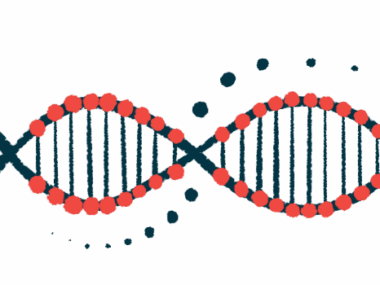
Of course, I had to think even more about the randomness of FA. Normally, an FXN gene contains a GAA segment that is repeated five to 33 times. In people with FA, the segment is repeated 66 to more than 1,000 times, and a higher number of repeats generally correlates with more severe disease and an earlier age of symptom onset.
So not only does it seem wild to me that someone would have FA, but the variance in its severity also seems so random.
The social worker in me needs to mention that other factors can influence how FA manifests in each of us. These include genetic factors, such as race, and sociological factors, such as money, education, and valuing collectivism over individualism.
I’m not saying we lack the power to improve our lives. Exercising and eating well are examples of ways we can do so. What I mean is that it’s important to recognize that FA, and the specific way it presents in you, is mostly outside your control.
Thinking about this randomness is very helpful when I’m struggling with survivor’s guilt. I am no better or worse, no more or less worthy, than my friends with FA, whether their disease is more or less severe than mine. Maybe it’s just luck.
Tomorrow, I head to a local company working to develop a gene therapy for FA. I will talk to them about living with this condition and the importance of their work. I am fortunate to have a voice I can use to support my community. Life with FA may be unpredictable, but I still have purpose. I can find meaning in the randomness.
Note: Friedreich’s Ataxia News is strictly a news and information website about the disease. It does not provide medical advice, diagnosis, or treatment. This content is not intended to be a substitute for professional medical advice, diagnosis, or treatment. Always seek the advice of your physician or another qualified health provider with any questions you may have regarding a medical condition. Never disregard professional medical advice or delay in seeking it because of something you have read on this website. The opinions expressed in this column are not those of Friedreich’s Ataxia News or its parent company, Bionews, and are intended to spark discussion about issues pertaining to Friedreich’s ataxia.

Leave a comment
Fill in the required fields to post. Your email address will not be published.