The Heart of Living With FA: Two Stories, One Shared Understanding
Written by |




Disclaimer: This article was developed by Lexeo Therapeutics to raise awareness of heart health in Friedreich ataxia (FA) and FA cardiomyopathy (FA-CM). Michael Wolfson, a member of Lexeo’s FA Cardiac Advisory Council, shared his personal experience as a care partner and advocate. Madelyn Raynsford, a member of Lexeo’s FA Cardiac Advisory Council, shared her personal experience living with FA. The views expressed are based on their individual experiences.
Cardiac complications are among the most serious aspects of Friedreich ataxia (FA), but changes in heart health can be overlooked or difficult to recognize. FA cardiomyopathy (FA-CM) can develop without obvious early warning signs and, over time, may lead to heart failure and shortened lifespan. Symptoms such as fatigue, dizziness, shortness of breath, and swelling in the feet or ankles can easily be attributed to other aspects of FA, making heart-related changes harder to identify.
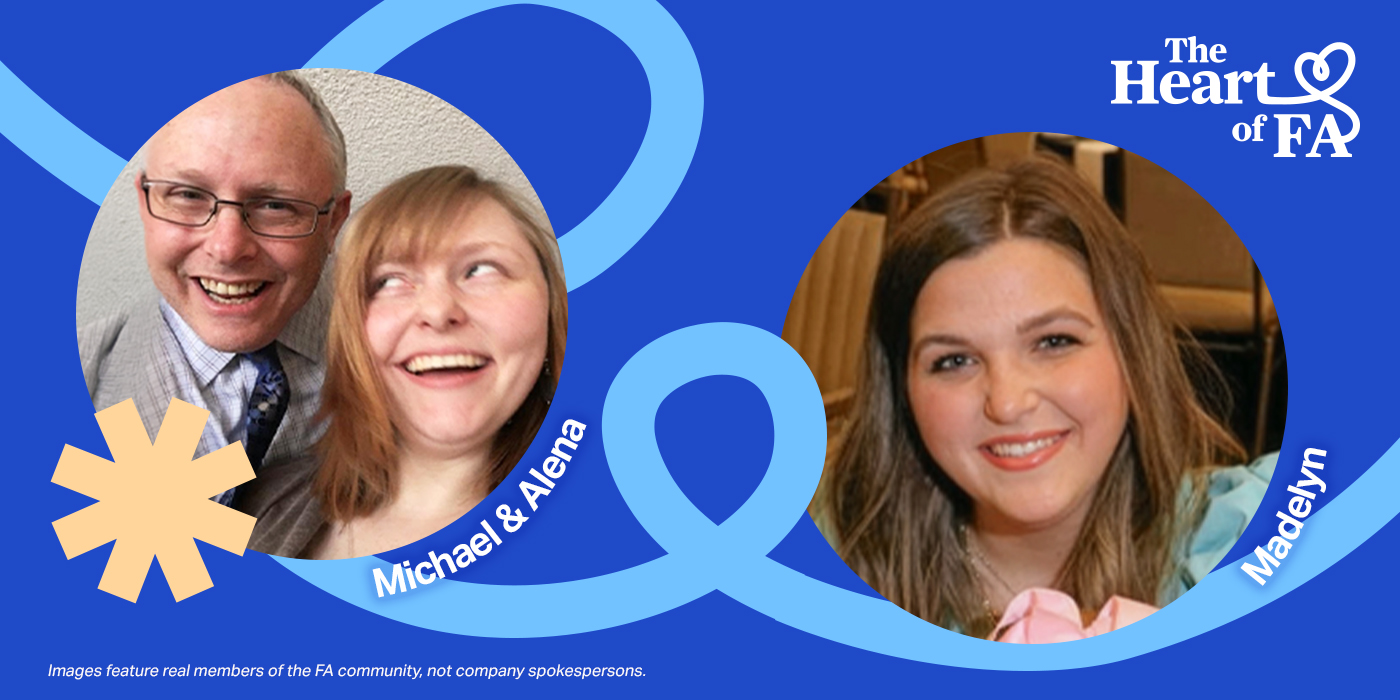
Madelyn Raynsford and Michael Wolfson have each experienced that complexity in their own way. Madelyn was diagnosed at age 13 after experiencing an episode of tachycardia. Now a young mother, she has spent much of her life navigating cardiac care as part of the broader reality of living with FA. Michael is the father of two daughters diagnosed with FA and now advocates for greater awareness of the condition’s cardiac risks.
Their stories underscore why cardiac health is an essential part of FA care and why many individuals and families affected by FA are seeking connections with others who share similar experiences. Communities like The Heart of FA provide this connection as a space to learn from others, share insights, and better understand the realities of navigating heart health in FA.
Why heart health matters in FA1,2
Heart involvement is a common and serious aspect of FA. Approximately 60% of people living with FA develop cardiac hypertrophy, or thickening of the heart muscle, which can make the heart stiffer and less able to fill and pump blood effectively. Over time, these changes may lead to FA-CM, a form of heart disease seen in FA.
Common symptoms of FA-CM include shortness of breath, fatigue, dizziness, and swelling of the feet or ankles. These changes may be overlooked because they can resemble other aspects of FA.
The severity of FA-CM can vary widely, even within the same family. It may develop without clear early warning signs and can lead to serious complications, including heart failure and shortened lifespan.
Current expert guidelines recommend regular cardiac evaluations, including at least annual heart monitoring, even when an individual feels well.
Madelyn
Madelyn’s FA story began with her heart. At age 13, an episode of tachycardia set the diagnostic process in motion. From the beginning, she and her family understood that cardiac health would be an important part of her care. Knowing that, however, did not mean they were fully prepared for everything it could involve.
Following her diagnosis as a teenager, Madelyn relied on her mother, a nurse, to help her understand medical information and place it in context. At age 18, she began learning more about FA, becoming active in the community, and taking greater ownership of her health. Over time, she came to understand that FA-CM can progress without obvious symptoms and may lead to serious complications.“`html
“Heart health is a critical piece of the puzzle. You cannot ignore it because it’s just so important.”
— Madelyn Raynsford
After experiencing serious cardiac complications that required hospitalization, Madelyn has continued to see a cardiologist regularly. Since becoming a mother last year, understanding her cardiac history and staying engaged with routine monitoring have taken on new meaning, becoming not only a way of caring for herself but also of protecting the future she plans to share with her family.
As she navigates early motherhood while living with FA, regular monitoring and an awareness of her cardiac history remain central to how she cares for herself and looks toward the future.
For Madelyn, cardiac care is not separate from the rest of FA; it is a critical piece of the puzzle.
Michael and Alena
The first changes Michael noticed in his daughter Alena were neurological. As a young child, she began falling more often than her peers and having difficulty with balance. The family’s search for answers eventually led to an FA diagnosis. One year later, Alena’s younger sister was diagnosed as well.
Cardiac testing conducted around the time of Alena’s diagnosis showed that her heart was already affected. As the Wolfsons learned more about what living with FA could involve, cardiology appointments became part of the family’s routine alongside care for the neurological effects.
Alena went into heart failure for the first time when she was 21 years old. After she developed COVID-19 in late 2022, Alena recovered from the acute illness, but her energy never fully returned. Everyday activities became more difficult, and the fatigue that had long been part of life with FA began to feel different, though the reason was not immediately clear. Further testing later revealed significant heart rhythm abnormalities and heart failure. Looking back, Michael recognizes that symptoms the family had associated with other aspects of FA, including fatigue and shortness of breath, were related to Alena’s heart. She was hospitalized in July 2023 and passed away later that month.
The family’s experience also highlighted that, because FA is rare, not every healthcare provider knows how best to evaluate or treat its complications. When Alena was first diagnosed with heart failure and during further hospitalizations, providers did not always know how to appropriately treat her, and the Wolfsons found it essential to advocate on their daughter’s behalf.
“With only 5,000 people in the United States living with FA, not enough doctors understand it. You need to be your own advocate, and you need to have someone who’s ready to step in and be your advocate when you can’t do it.”
— Michael Wolfson
Today, Alena’s experience is at the heart of Michael’s advocacy. He hopes other families will feel empowered to take notice of subtle changes and discuss them with their care team rather than assuming they are simply part of FA progression.
“Be aware of any slight changes in your health… know your own body”
— Michael Wolfson
By sharing Alena’s story, Michael hopes to help others better understand the seriousness and importance of heart health in FA.
Finding Your Community
Madelyn and Michael both turn to community as they navigate the uncertainty and isolation that can come with FA. Connecting with others offers practical knowledge, emotional support, and the reassurance of being understood.
Over more than two decades, some of the Wolfson family’s most enduring relationships have grown from the FA community. Other families helped them better understand the condition, navigate difficult decisions, celebrate milestones, and support one another. Over time, those relationships came to feel less like a traditional support network and more like an extended family.
“FA is such a rare disease; it’s hard not to feel alone. What kept me going was finding our community, our birds of a feather.”
— Michael Wolfson
For Madelyn, that connection does not depend on having identical experiences. FA affects each person differently, but even a small moment of recognition can offer meaningful insight or reassurance. Sharing experiences can also help put words to feelings and challenges that might otherwise be carried alone.
Much of Madelyn’s connection with others happens online through group messages and social media communities, including The Heart of FA on Instagram which provides a dedicated space for people living with FA, care partners, and loved ones to hear personal stories, learn more about cardiac health, and recognize parts of their own experiences in the stories of others.
“The FA journey can be very lonely. Knowing someone else is walking the same path can remind you that you are not alone.”
— Madelyn Raynsford
Finding Connection in the FA Community
No two experiences of FA unfold in exactly the same way, but Madelyn’s and Michael’s stories underscore several shared priorities. Cardiac health must be recognized as an integral part of FA care, subtle changes deserve attention, and regular cardiac monitoring remains important even when someone feels well. Community can also help individuals and families better understand medical information, identify questions to bring to their care teams, and feel less alone as they navigate daily living with FA.
Madelyn carries many of those same priorities into adulthood and motherhood as she manages her own cardiac health. Alena’s life continues to shape Michael’s advocacy and what he hopes other families will understand. Together, their perspectives offer a fuller picture of FA: one that reflects both the seriousness of cardiac involvement, and the strength people can find through connection.
Madelyn’s and Michael’s stories are only two of many experiences within the FA community. While every journey is different, each perspective can offer insight, reassurance, and a deeper understanding of life with FA.
If Madelyn’s and Michael’s stories sound familiar, you are not alone. Cardiac changes in Friedreich ataxia are easy to miss, but they are far easier to navigate alongside people who have walked the same path. Follow @theheartoffa on Instagram, a community platform brought to you by Lexeo Therapeutics for real stories from individuals living with FA and their care partners, ongoing education about cardiac health in FA, and a place to connect with others who understand.
References
- Payne RM. Cardiovascular Research in Friedreich Ataxia. JACC: Basic to Translational Science. 2022;7(12):1267-1283. doi:10.1016/j.jacbts.2022.04.005.
- Lin KY, Patel A, Peverill RE, Pousset F, Savvatis K. Chapter 4. The heart and cardiovascular system in Friedreich ataxia. Clinical Management Guidelines for Friedreich Ataxia. 2022. https://frdaguidelines.org/chp4overview/.