
Genetic discovery explains why FA skips entire continents
Scientists trace gene category back thousands of years
Written by |
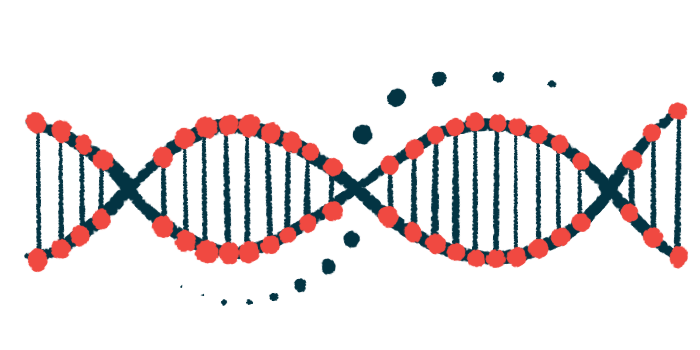




Genetic mutations that cause Friedreich’s ataxia (FA) arise from a previously unrecognized category of FXN gene variants called a protomutation, according to a study.
The protomutation was found exclusively in people of Eurasian descent and explains why the disease has always been limited to those populations.
“These findings define a stepwise model for the evolutionary origin of [FA] susceptibility, and provide a framework for understanding its unequal global distribution,” the scientists wrote.
The study, “FXN protomutations are the source of pathogenic expanded GAA alleles in Friedreich ataxia and explain its unequal population distribution,” was published in Human Molecular Genetics.
FA is caused by mutations in both copies of the FXN gene, each inherited from one biological parent. In most cases, the type of mutation is called a trinucleotide repeat expansion, in which three DNA building blocks — GAA — are abnormally repeated within the gene. Healthy individuals can carry two versions, or alleles, of GAA repeats: short normal (SN) alleles with five to 11 repeats, and long normal (LN) alleles with 12 to 33 repeats. Some people without symptoms carry what are known as premutation alleles with 34 to 60 repeats, while fully expanded (E) alleles that cause FA commonly have more than 500 repeats.

Search for ‘an unrecognized step’ in evolution
It’s known that all FA-causing E alleles originated from one or more LN alleles. Still, a direct transition from LN to E alleles has never been observed, unlike premutations, which can expand directly into E alleles over one or more generations.
FA is common among people of European, West/Central/South Asian, and North African descent, but it’s rarely seen in people of sub-Saharan African or East Asian descent.
The researchers suggested that there “must be an unrecognized step in the evolution of LN to premutation/E alleles that did not occur in sub-Saharan Africa, but which occurred exclusively in Eurasia, allowing [FA] to develop there.”
To investigate, the team analyzed the FXN gene in 15 FA patients, three carriers with an FXN mutation in only one gene copy, and three non-FA individuals. They identified a set of 23 distinct DNA markers shared by all expanded E alleles that were absent from ordinary LN alleles.
Beyond this shared core, E alleles fell into two groups based on additional markers, called H1 and H2 haplotypes. (A haplotype is a combination of DNA changes that are inherited together.) This suggests that disease-causing E alleles arose from LN alleles on at least two separate occasions in human history.
To test whether the E alleles arose from a subset of LN alleles, the researchers analyzed 604 people from six Eurasian populations and found 179 alleles carrying the core FA genetic fingerprint. Some of these also carried the H1/H2 markers, suggesting that types of E alleles have originated from a subset of LN alleles, which the team dubbed protomutation alleles.
When analyzed separately from LN alleles, which lack the H1/H2 markers, protomutation alleles contain 14-37 GAA repeats and are significantly longer than LN alleles.
Protomutations “constitute a defined set of alleles that bridges the size range from LN alleles to premutations/E alleles, thus resulting in a continuum from non-disease through to E alleles,” the team wrote.
The researchers also noted that a protomutation allele with 22 GAA repeats had expanded to 23 repeats through one generation, suggesting that protomutations “have the ability to mutate via intergenerational transmission, thereby producing small changes in repeat length.”
To investigate why FA is absent in sub-Saharan Africa, the team analyzed the FXN gene in 391 people from four sub-Saharan African populations. While about 12.5% of their FXN alleles were LN alleles, none carried the H1/H2 markers that define protomutations, showing that the transition from LN to protomutation alleles “occurred subsequently and exclusively in Eurasia.”
Then, a genetic analysis of 1,027 African and African-American individuals found evidence that genetic admixture, the mixing of genetic ancestry from different populations, had introduced Eurasian FXN alleles into African-Americans. This indicated that genetic admixture “has introduced a previously unrecognized, albeit slight, genetic susceptibility to [FA],” the researchers wrote.

Variations across regions
Across Eurasian populations, the prevalence of protomutation alleles varied considerably. Among European and Middle Eastern populations, protomutation allele frequencies were substantial, ranging from 7% to 10%, while in East Asian populations, protomutations were absent.
South Asian populations showed significantly lower frequencies, at about 1.31%, compared with 8.18% in certain European populations. Elevated frequencies were noted in some smaller populations, including the Amish, Israeli Druze, Ashkenazi Jews, Algerian Mozabites, and Sardinians.
To trace how far back protomutations extend in human history, the team examined genetic data from 1,848 ancient individuals spanning up to about 38,000 years before present. Protomutation alleles, identified through the presence of the H1 and H2 markers, were found in 14 and 9 ancient individuals, respectively, and “have existed in Central and Eastern Europe as well as Western Asia for at least 9,000 years,” according to the scientists.
Both H1 and H2 markers were present among early Neolithic farmers from Anatolia (present-day Turkey) and in key individuals who represent the migration of early farmers into Europe. Ötzi the Iceman, a well-known prehistoric figure dating to approximately 5,000 years ago, carried protomutation markers. Protomutations were also well represented among Viking-era individuals from about 1,000 years ago.
“These data indicate that FXN protomutations serve as a reservoir for the generation of premutation and E alleles, and for millennia have sustained the geographically-defined population distribution of [FA],” the researchers wrote.



Leave a comment
Fill in the required fields to post. Your email address will not be published.